
Just as a building needs solid foundations if it’s to reach the sky, so too does a sector. In Oman, real estate is on that growth trajectory, supported by a solid bedrock: a transparent legal system, full foreign ownership, and Vision 2040 – a national economic transformation plan that includes building the sustainable cities of the future.
The numbers bear this out. In the first half of 2026, the total value of property transactions reported by the Ministry of Housing reached OMR 1.43 billion (USD 3.71 billion), representing a 5.4% year-on-year increase. Meanwhile, Foreign Direct Investment in the real estate sector rose 1.2% year-on-year to hit OMR 602.5 million (USD 1.6 billion) by the end of the first quarter in 2026. Analysts expect further growth, with Mordor Intelligence forecasting a 6.74% compound annual growth rate that will take the residential real estate market size to USD 7.3 billion in 2031.
These figures represent a structural expansion, not a short-term spike. Government policy is reinforcing the momentum, with Oman Vision 2040’s diversification agenda along with the USD 5.2 billion Future Fund positioning Oman’s real estate market as a pivotal enabler of logistics, services and tourism-led growth.
The rise of the ITC
Understanding where Oman’s real estate market is heading starts with understanding where it came from. Before 2020, the housing ministry distributed land to Omani citizens, who then built on it themselves. In 2020, that model shifted to delivering finished homes, backed by government subsidies that widened access to ownership. Since then, large-scale master-planned developments have emerged across the country, combining advanced infrastructure, sustainable design and green space to create futuristic smart cities.
As these developments took shape, so too did Integrated Tourism Complexes, or ITCs — an approach designed to attract foreign capital and build mixed-use communities combining residential, commercial and hospitality space. Crucially, foreigners have the right to freehold ownership within ITCs, along with the ability to apply for family residency permits, facilitating long-term stays and strengthening business ties in Oman.
The result has been a genuine internationalisation of Oman’s property market. Oman maintains a balanced demographic mix, with Omani citizens accounting for around 57% of the total population and expatriates making up the remaining 43%, equivalent to approximately 2.32 million residents. That large, established expatriate community — alongside a growing wave of international investors — has become a critical second engine of real estate demand.
LA VIE: a case study for the future of real estate
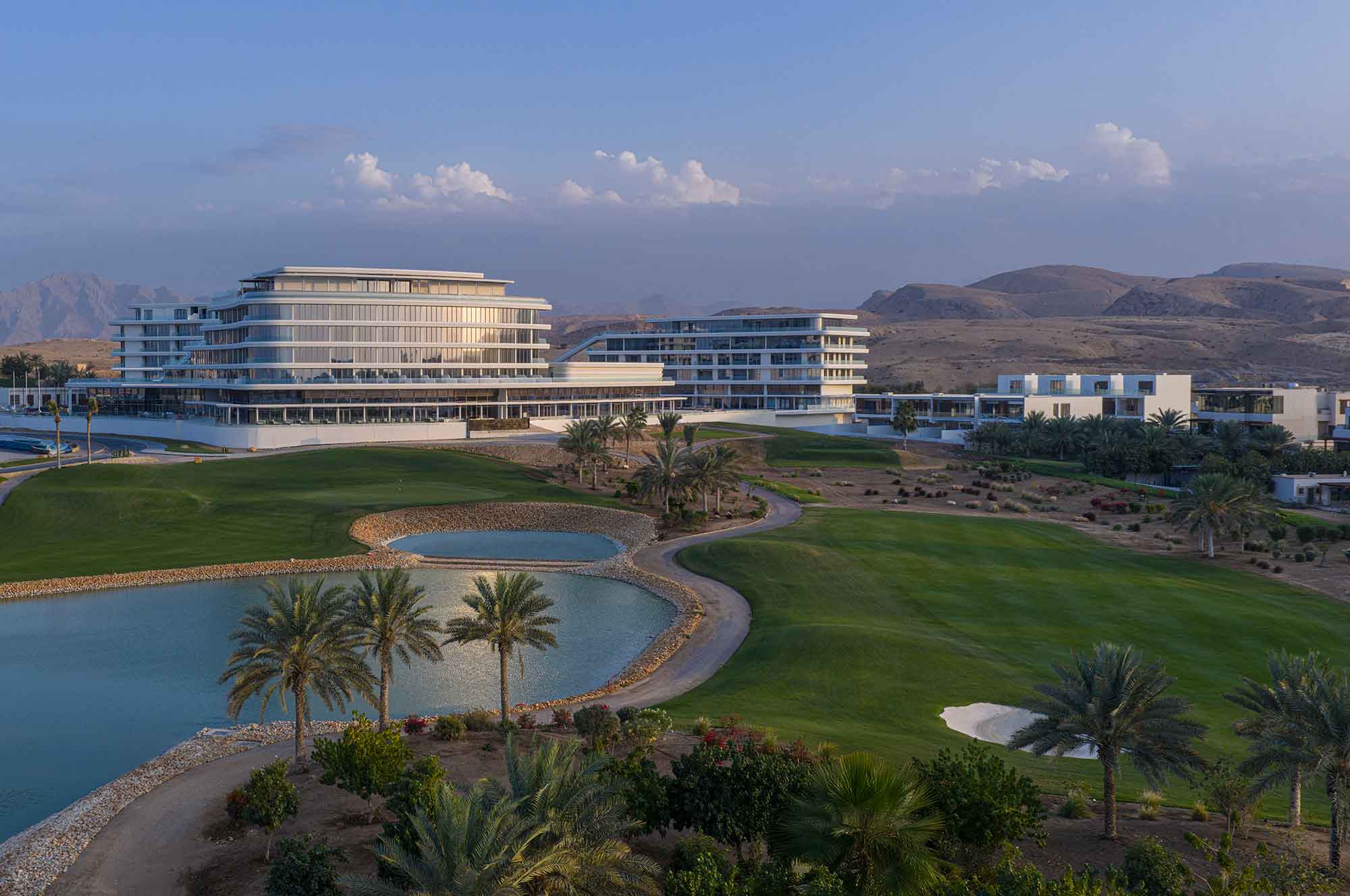
At LA VIE, ORIS’s flagship ITC in Muscat, we have seen this shift play out first-hand. Buyers have arrived from Germany, Russia, Egypt, Iran, the United Kingdom, and the United States. The project’s 130 units have attracted a truly global ownership base, a fact that would have been difficult to imagine in Oman’s property market just a decade ago.
LA VIE is a blueprint for the future of real estate in Oman at the luxury end of the market. A collaboration with the prestigious Tivoli hotel brand, it represents the rise of mixed-use developments, integrating a hotel, branded residences, a golf course,restaurants, and other amenities, all within a single community in central Muscat. Residents enjoy five-star hotel services around the clock. The branded residence concept — where a hotel brand oversees a residential building — is beginning to take off in Oman. LA VIE’s presence in the market, represents the leading edge of this trend.
Sustainability, from grass to glass
Sustainability is a pillar of Oman’s Vision 2040, and the real estate sector has a crucial role to play. For ORIS, ESG is not a compliance exercise: it’s a design philosophy embedded from the ground up.
At LA VIE, we use treated grey water from the development for all landscaping irrigation, rather than drawing on fresh water supplies. The golf course has been re-turfed with paspalum grass, a variety that requires significantly less water. On the building side, the glazing throughout LA VIE reduces heat transfer from outside, lowering the energy demand for air conditioning. Even the hot water system has been engineered to deliver instantly, eliminating the water waste that occurs in conventional hotel plumbing while water runs cold before reaching the right temperature.
This is a microcosm of a broader trend throughout Oman: green-building codes are being phased in from 2026, ensuring material efficiency and thermal standards across the sector. LA VIE was designed ahead of that curve.
The path to 2040
The demand for this kind of development is growing. LA VIE was launched with residences positioned at attractive price points, creating a compelling entry opportunity for early buyers. Since then, values have appreciated significantly, with two-bedroom apartments increasing by approximately 54% and studios by as much as 50–70% by the close of sales. The trajectory for ORIS, a subsidiary of Ominvest, is equally striking. When ORIS was established in 2017, it accounted for around 3-4% of Ominvest’s total revenue. Our target is to grow that to 10-12%, reflecting both the scale of the pipeline ahead and the broader conviction, shared across the Ominvest group, that real estate is a structural growth story for Oman, not a cyclical one.
ORIS’s ambition is to occupy a distinct, luxury niche within Oman’s real estate market. We are currently working on three significant developments, representing more than one million square metres of development over the next six to seven years.
This ambition is underpinned by our confidence in the continued evolution of Oman’s real estate sector. The dynamism of the private sector, rising international demand and the over-arching framework of Oman’s Vision 2040 are converging to create the foundations for a new phase of sustained growth, investment and development across the Sultanate.